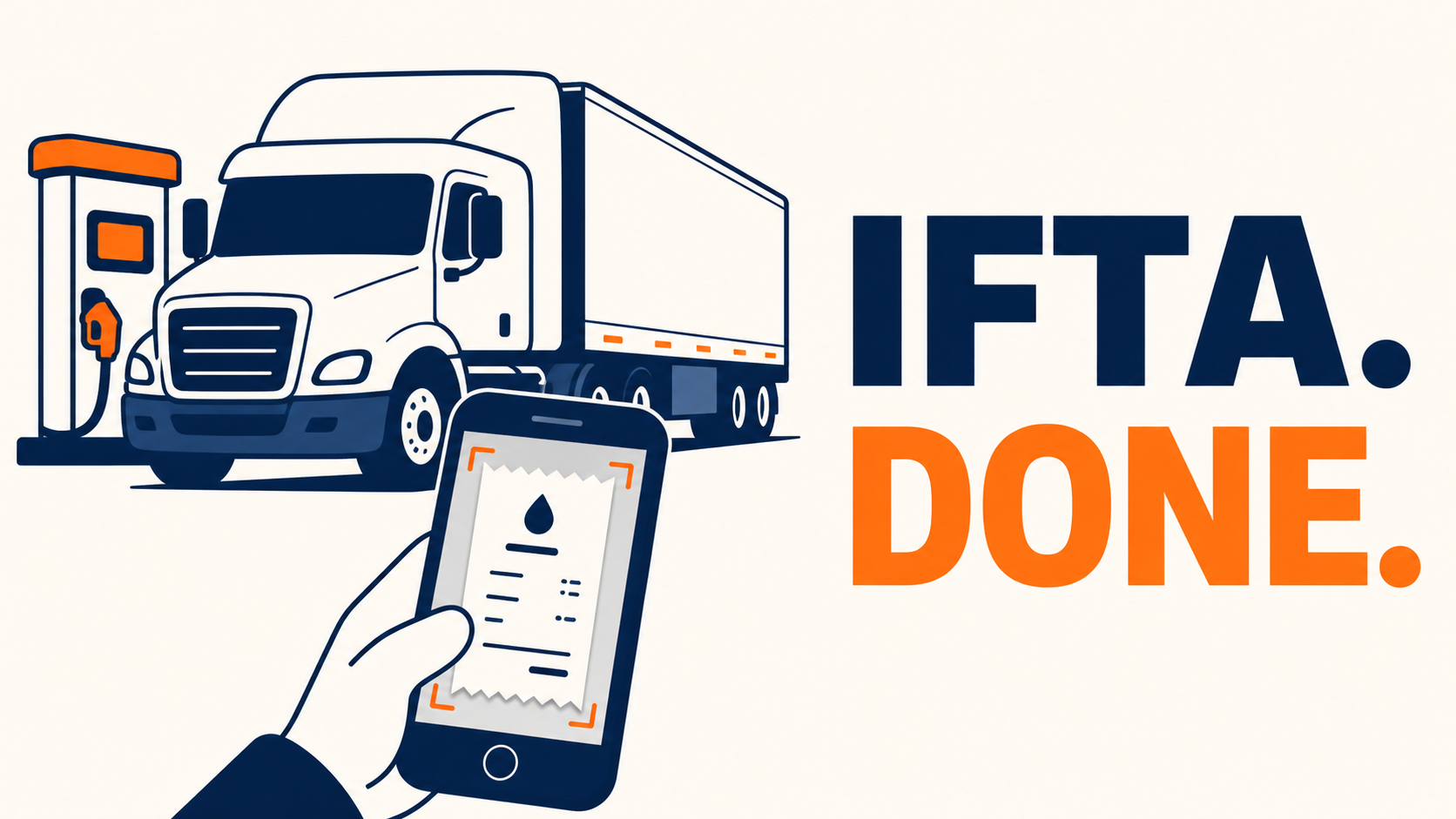
Fuel Receipt Capture
Recovering From a Multi-Year Fuel Audit
Industry: Regional trucking, cross-border operations
A mid-sized trucking client received a routine IFTA audit notice that included a request for a specific fuel receipt from over two years prior. Despite organized quarterly filings, the original physical receipt could not be located, it had either faded from thermal-paper degradation or been damaged in long-term storage.
The audit closed with a "documentation deficient" notation. Within weeks, the client's insurance broker flagged the audit history as a risk factor, leading to an upward adjustment in their premium at renewal.
The Solution
We deployed Fuel Receipt Capture across the fleet. The workflow is fully automated at the point of purchase: at the pump, drivers open our add-on and photograph the receipt. The system reads the receipt automatically and populates every field, fuel volume, total cost, station, transaction time, without manual entry. Vehicle ID, GPS location, and odometer reading are pulled from the the tracking device. The complete record, including the receipt image and all extracted data, is stored and remains searchable indefinitely by date, vehicle, driver, location, or amount.
Six months after deployment, the same client received a spot-check from a different auditor. The requested receipt was retrieved, downloaded, and emailed in under 15 minutes.
A secondary benefit became apparent during the first quarter of use: cost-per-kilometre is calculated automatically from the captured data, surfacing fuel-spend outliers at the vehicle level. This identified a pattern of unnecessarily frequent fuel stops on one unit, which was addressed through driver coaching.
Where This Applies
Fuel Receipt Capture is most relevant for fleets that:
File IFTA across multiple jurisdictions
Are subject to DOT, tax, or insurance audits requiring multi-year recordkeeping
Manage fuel without a comprehensive fuel-card data feed
Need defensible documentation that survives long retention periods
The core value is converting a perishable physical record into a permanent, fully digitized one at the moment of purchase, with no manual data entry, eliminating both the storage risk of paper and the input error risk of typed entry.